Pool Era field notes · Care and ownership
Keeping a Pool Cool in a Texas August
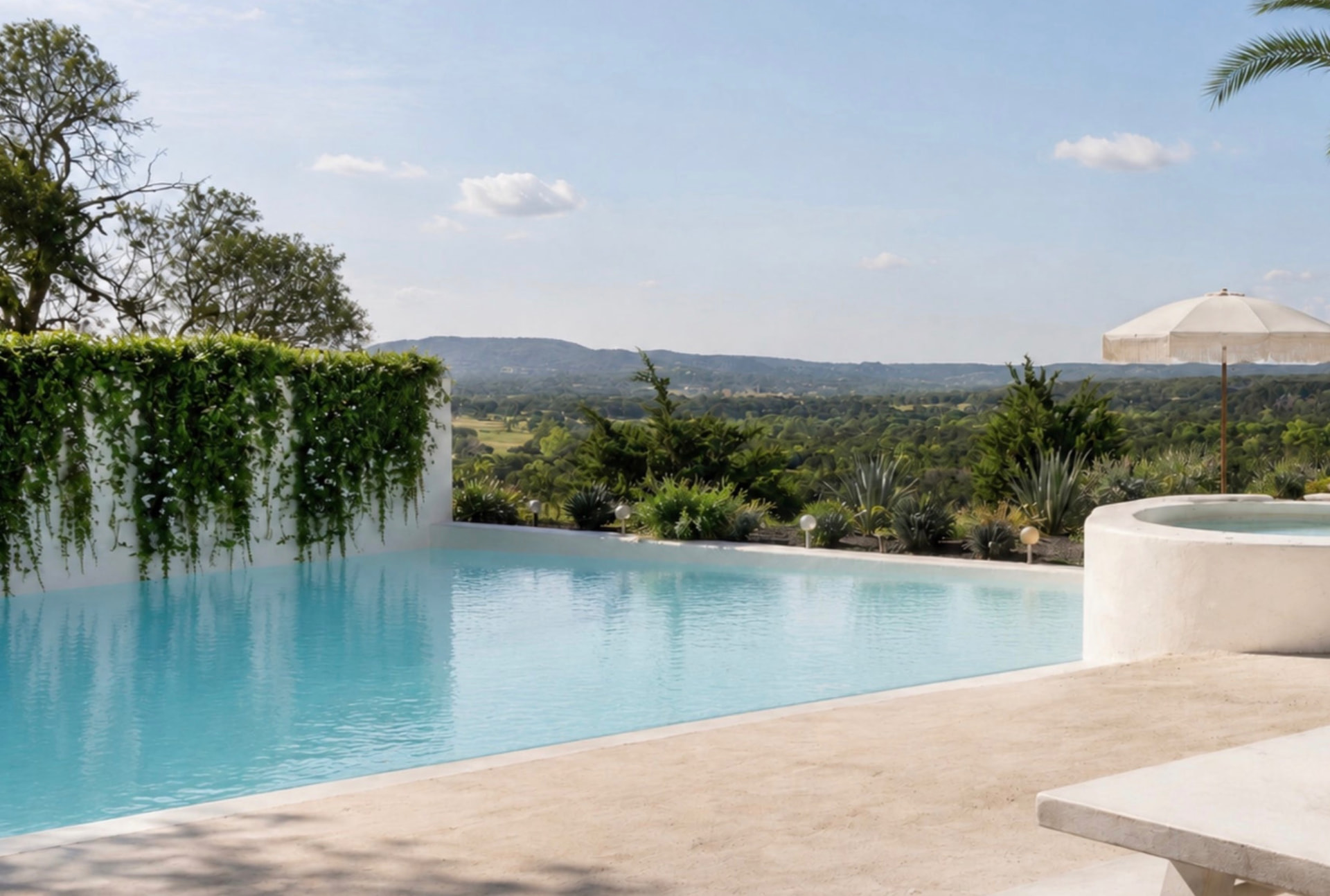
Does your pool feel like bath water by the middle of August? Long, hot days and warm nights give the water no chance to cool off.
Here is why it happens, and what actually helps.
Short answer
Block the sun, let the night work.
Shade the water in the afternoon, and help it lose heat at night by running a fountain, waterfall or bubblers after dark. A cover saves water, but it also holds heat in, so it may help to leave it off on hot nights. For a pool that stays too warm, a heat pump with a chill mode can cool the water.[1]
Why
Why the water gets so warm.
Our heat runs long. In September 2026, the National Weather Service measured an average high of 97.1 °F at San Antonio, 7 degrees above normal, and every one of the 30 days reached at least 90 °F.[2]
At Austin, the NWS says the first 100-degree day comes on July 9 on average, and the last on August 21.[3] Warm nights matter too. When it stays warm after dark, the water cannot give back the heat it took in during the day.
What helps
Options, side by side.
| Option | How it helps | Trade-off |
|---|---|---|
| Shade | Sails, a pergola or trees cut the sun on the water in the afternoon. | Leaves in the pool. Ask your city before you build a big shade structure. |
| Night fountain or waterfall | Moving water in the air sheds heat after dark. | More evaporation, so more top-off water. Pump run time. |
| Cover timing | A cover keeps leaves and sun off, but holds heat in. | Off on hot nights to let heat escape; on to save water. |
| Heat pump with chill mode | Cools the water directly, like an air conditioner for the pool. | Equipment cost, power use, space and wiring at the pad. |
| Design | A deeper pool and lighter finish warm up more slowly. | Only an option when building or remodeling. |
Water
Cooling costs water.
Fountains cool by evaporation, and evaporation takes water. The Department of Energy says evaporation rises with warmer water, more wind and lower humidity.[4] The EPA says a pool cover can prevent up to 95 percent of pool water evaporation, and that covers also help the water hold heat.[5]
So there is a trade-off. In a drought, check your water provider's current stage before you run fountains all night, and see our drought guide.
Field note. Run the water features from late evening into the early morning, when the air is coolest. Daytime fountains mostly lose water to the hot air.
Chillers
When a chiller makes sense.
Hayward sells heat pumps with a heat+chill mode, and says they can warm the water, cool it in hot climates, or chill it to 40 °F for a cold plunge.[1] A unit like this also heats the pool in spring and fall, which can make it easier to justify.
A chiller needs room at the equipment pad, a dedicated circuit and good airflow. Ask how big a unit your pool needs and what it will draw on your electric bill before you decide.
Common questions
Cooling questions.
How do I cool pool water without a chiller?
Shade the water in the afternoon, run fountains, waterfalls or bubblers at night, and leave the cover off on hot nights. Those steps help the pool give back the heat it gained during the day.
Is a pool chiller worth it in the Hill Country?
It depends on how you use the pool and how hot it gets. A heat pump with a chill mode can also heat the water in spring and fall, so you get use from it in more months.[1]
Does a pool cover make the water hotter?
It can. The EPA says covers help pool water hold heat, and that they can prevent up to 95 percent of evaporation.[5] In August, many owners take the cover off at night.
Can I cool the pool by adding cold hose water?
Only a little, and it costs water. In drought stages, extra filling may be limited, so check your provider's rules first.
Does a waterfall cool a pool?
Yes, mostly at night. Water falling through the air sheds heat, but it also evaporates faster, so you will top off more.
Planning
Plan for August now.
Shade, water features and chillers each change the equipment pad, the power and the water bill. Every pool and every site is different, so we can talk through what fits yours.
Related
More field notes
 Care and ownershipIs My Pool Leaking or Just Evaporating?How to run a bucket test, and the signs that point to a real leak.Read
 Care and ownershipPool Water During Hill Country Drought RulesHow drought stages work, and what they mean for filling and topping off.Read
 Care and ownershipFreeze Week: Protecting Pool Equipment in a Hill Country Cold SnapA plan for the days before a hard freeze, the night of and the morning after.Read
Sources
Where these facts come from
- Hayward: HeatPro MCHX Series Heat Pump, Heat+Chill (product page)
- National Weather Service Austin/San Antonio: San Antonio climate report, September 2026
- National Weather Service Austin/San Antonio: Austin Climate Summary (freeze dates, 100-degree days, Flash Flood Alley)
- U.S. Department of Energy, Energy Saver: Swimming Pool Covers
- U.S. EPA WaterSense: Pool Water Efficiency
Sources checked October 25, 2026. Rules, fees and water stages change; check the source before you rely on a number.
Before you rely on this. This field note is general information, not professional, engineering or legal advice. Every pool and every site is different. What Pool Era does on your project, how and with what warranty, is only what your written agreement says. Local codes and HOA rules change, so check with your city, county or HOA before you rely on anything here. Website terms