Pool Era field notes · Planning and cost
Plunge Pools and Small Pools for Hill Country Lots
Is your yard too small, too steep or too rocky for a full pool? A plunge pool may fit. It is a small, deep-enough pool built for cooling off, sitting and soaking, not for laps.
Here is how plunge pools compare, and what still applies on a small lot.
Short answer
Smaller pool, same rules.
A plunge pool fits where a full pool won't, and it means less digging in rock, less water and less to heat or chill. It still needs the same planning: a permit, setbacks, a barrier and room for equipment. San Antonio's permit form, for example, asks for 5-foot side and rear setbacks for a home pool or spa.[1]
What it is
A plunge pool, explained.
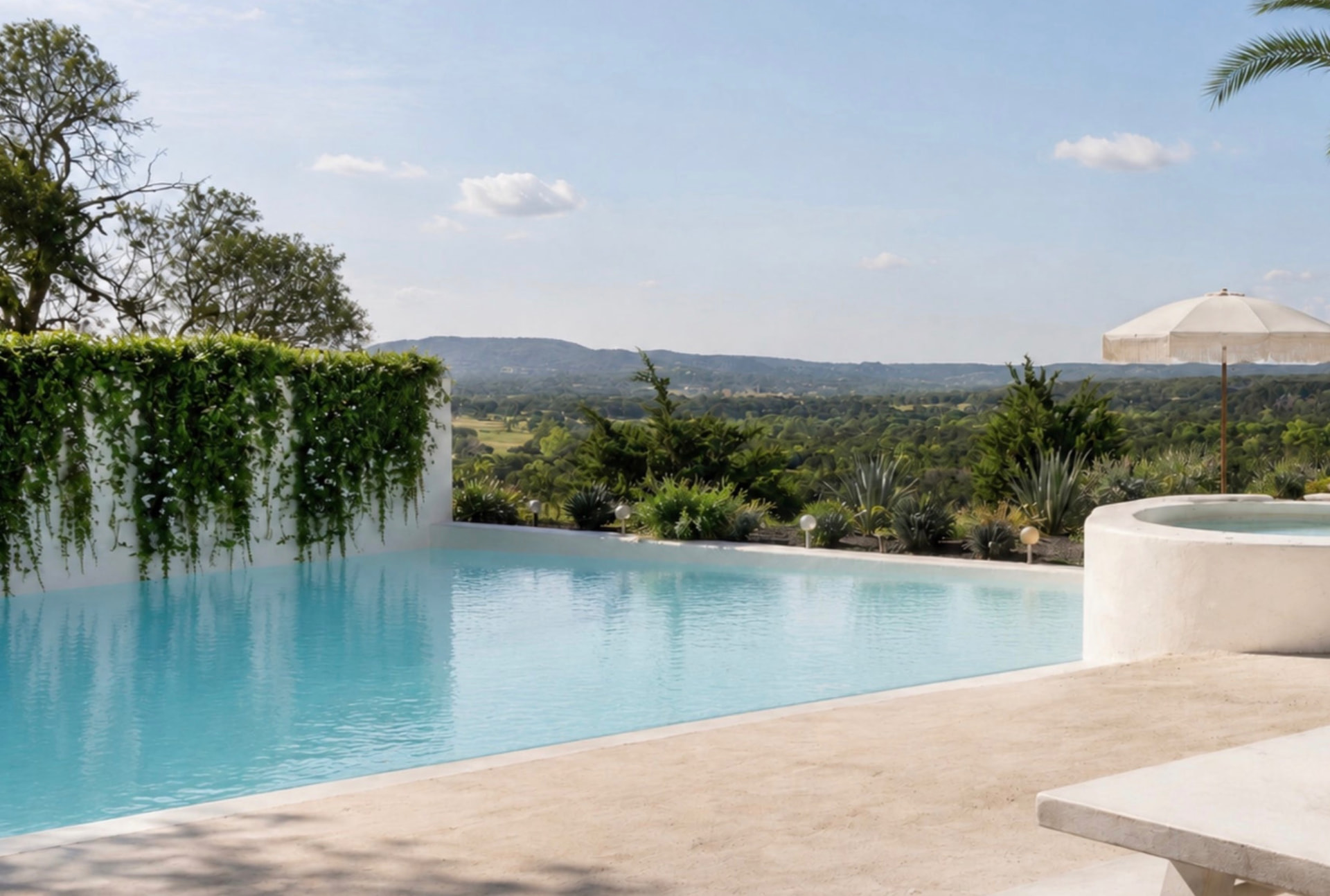
There is no single size. Most plunge pools are a fraction of a full pool, deep enough to stand in and often with a bench to sit on. They can be built in concrete like a full pool, set as a precast or fiberglass shell, or raised above the deck with a stone wall.
On Hill Country lots, the small footprint can matter more than the price. Less digging means less rock to break and haul. Our guide to building on rock explains why that matters here.
Compared
Plunge pool, full pool or spa?
| Question | Plunge pool | Full pool | Spa |
|---|---|---|---|
| Best for | Cooling off, sitting, soaking | Swimming, games, a crowd | Hot soaks |
| Yard space | Small | Large | Smallest |
| Rock and dig | Less | Most | Least |
| Heat or chill | Small volume, so quicker to change | Big volume, slower | Built to heat |
| Permit and barrier | Still apply | Apply | Check your city |
Rules
What still applies on a small lot.
- Permit. The City of Boerne says a below-ground pool needs a permit application and a site plan. Only prefabricated above-ground pools under 24 inches deep skip the permit there.[2]
- Setbacks. San Antonio's form asks for 5-foot side and rear setbacks and does not allow pools in front of the house.[1]
- Foundation. New Braunfels asks for an engineer's certification when a pool dig is within 10 feet of a building foundation.[3]
- Septic. The state septic rule sets minimum distances between septic parts and pools, such as 25 feet from the edge of a spray area.[4]
Fences matter for small pools too. The CPSC's barrier guidelines describe fencing a pool on all sides with self-closing, self-latching gates.[5] Our permit guide covers more.
Heat and chill
Warm in winter, cool in August.
A small pool changes temperature faster than a big one, which makes heating and chilling more practical. Hayward says its heat+chill heat pumps can warm the water or chill it down to 40 °F for a cold plunge.[6]
A cover helps hold the heat in. The Department of Energy says covering a pool when it is not in use is the most effective way to cut heating costs, with savings of 50% to 70% possible.[7]
Field note. On a tight lot, mark the plunge pool, the equipment pad and the walkway on the ground with paint or string before anyone draws a plan. Small pools still need room for people to walk around them.
Common questions
Plunge pool questions.
Does a plunge pool need a fence?
Usually, yes. Barrier rules come from your city or county, and a small size does not usually change that. San Antonio's permit form asks the site plan to show the pool barrier, alarms and self-closing, locking gates.[1]
Does a plunge pool need a permit?
In most Hill Country cities, a below-ground pool needs one. Boerne, for example, only exempts prefabricated above-ground pools under 24 inches deep.[2]
Plunge pool or hot tub: which is better?
A spa is built to run hot. A plunge pool is built to cool off in summer, and with a heater it can be warm in winter too. Think about which months you will use it most.
Can a plunge pool be heated and cooled?
Yes. Some heat pumps have a chill mode. Hayward says its heat+chill units can heat the water or chill it to 40 °F.[6]
What does a plunge pool cost?
It depends on rock, access, finish and equipment, the same things that move the price of any pool. Our guide to what drives pool cost explains each one.
Next step
Will one fit your yard?
Property lines, septic, slope and access decide where a small pool can go. Conditions vary, so your project gets a written scope after we have walked the site.
Related
More field notes
 Planning and costPool Permits in San Antonio, Boerne and New Braunfels: What the City ChecksSite plans, setbacks, barriers, septic distances and inspections.Read
 Planning and costWhat Drives the Cost of a Pool in the Texas Hill Country?Rock, slope, access and finish choices explain most of the gap between two quotes.Read
 Planning and costBuilding a Pool on Hill Country Rock and SlopesLimestone, caliche and steep lots change the dig, the design and the price.Read
Sources
Where these facts come from
- City of San Antonio Development Services: Swimming Pool Permit Application
- City of Boerne: Do I need a permit for... (FAQ)
- City of New Braunfels: Residential Pool & Spa Permit Checklist
- 30 TAC §285.91(10), Table X: Minimum Required Separation Distances for On-Site Sewage Facilities (TCEQ rule, as reproduced)
- U.S. Consumer Product Safety Commission: Safety Barrier Guidelines for Residential Pools (Pub. 362)
- Hayward: HeatPro MCHX Series Heat Pump, Heat+Chill (product page)
- U.S. Department of Energy, Energy Saver: Swimming Pool Covers
Sources checked October 25, 2026. Rules, fees and water stages change; check the source before you rely on a number.
Before you rely on this. This field note is general information, not professional, engineering or legal advice. Every pool and every site is different. What Pool Era does on your project, how and with what warranty, is only what your written agreement says. Local codes and HOA rules change, so check with your city, county or HOA before you rely on anything here. Website terms