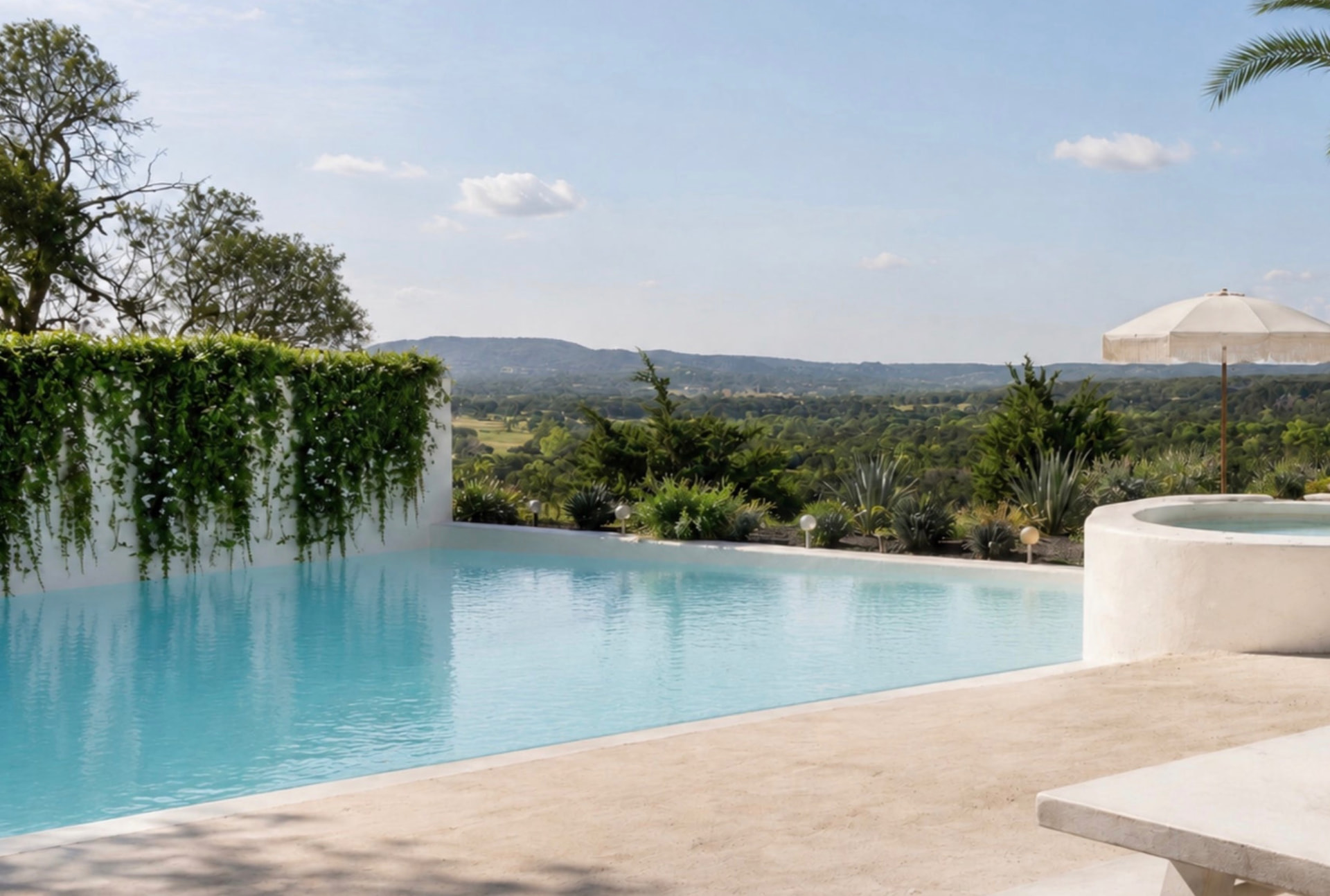
Pool Era field notes · Finishes and renovation
Plaster, Quartz or Pebble: Choosing a Pool Finish in the Hill Country
Building new or refinishing, and not sure which surface to pick? The finish sets the water color, how the floor feels on your feet and how often you will refinish.
Here is a plain comparison, with what our hard water means for each.
The three families
Plaster, quartz and pebble.
- Plaster. White cement and fine marble or similar sand. Smooth and soft on feet. Usually the least costly to put in. White plaster gives that classic light-blue water, and it can be tinted.
- Quartz. Plaster with colored quartz mixed in. A little more texture and color, and often more resistant to wear than plain plaster.
- Pebble. Small rounded stones set in cement, then exposed. More texture underfoot and deep water colors. Usually costs the most up front.
How long they last
Care matters as much as the finish.
The National Plasterers Council says pool plaster can last up to 20 years with proper care.[1] Pebble Technology International, which makes pebble finishes, says plaster needs refinishing every 5 to 10 years, quartz lasts about 7 to 15 years, and pebble lasts over 20 years with proper care.[2]
Those numbers do not agree, and both come from groups with a stake in the answer. What they share: water chemistry, brushing and the first month of startup decide much of the life of any finish.
Our water
Hard water is the Hill Country factor.
The San Antonio Water System says calcium carbonate in Edwards and Trinity aquifer water is natural, and that the typical hardness of its water is 15 to 20 grains per gallon.[3] Many wells in the region are hard too.
Hard water does not ruin a finish. But it can leave white scale on tile and rough spots on the surface if pH and alkalinity drift high. Darker colors and smooth plaster show scale and streaks more. Textured pebble hides them better.
Whatever you pick, the start-up matters. The National Plasterers Council says a new finish is especially likely to stain, scale or discolor in the first 28 days.[4]
Choosing
A simple way to decide.
- Want smooth and soft for kids, at a lower cost up front? Plaster.
- Want some color and a bit more durability? Quartz.
- Want deep color, texture and the longest life the makers claim? Pebble.
- Have a tanning ledge or steps people sit on for hours? Feel samples with bare feet first.
Before you choose, look at finish samples in daylight, next to your coping and tile.
Related
More field notes
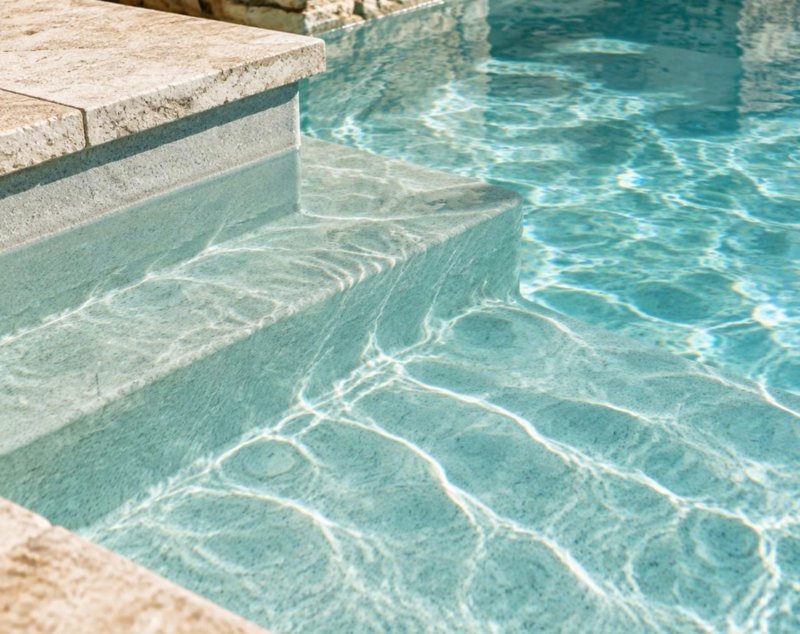 Finishes and renovationThe First 28 Days After New Pool PlasterFilling, brushing and chemistry for a new finish, step by step.Read
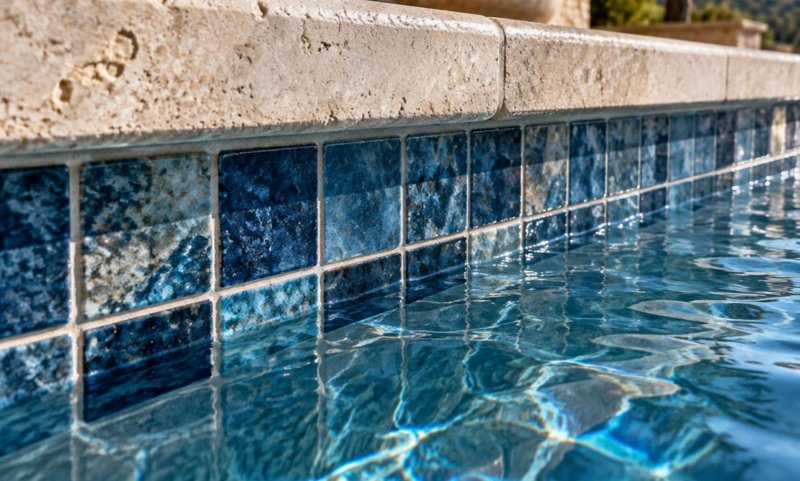 Care and ownershipHard Water and White Scale on Pool TileWhy white crust builds up on tile, and how to slow it down safely.Read
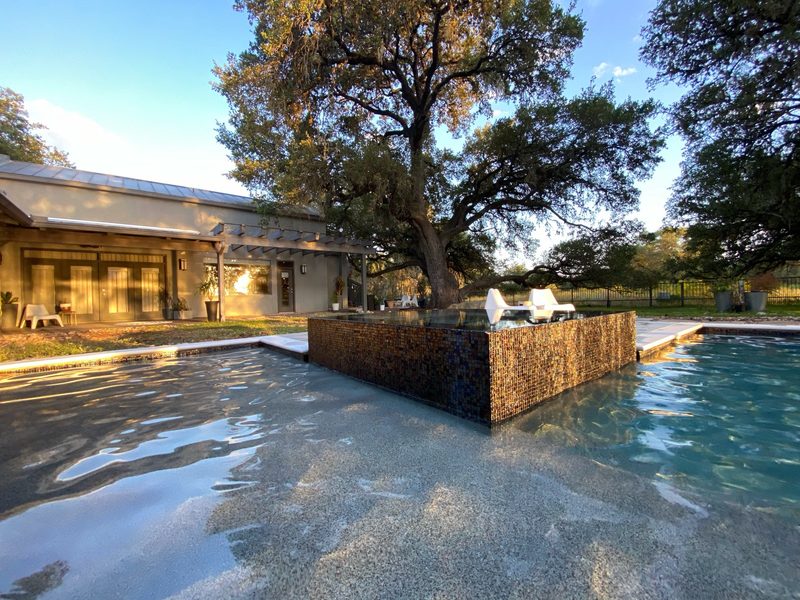 Planning and costWhat Drives the Cost of a Pool in the Texas Hill Country?Rock, slope, access and finish choices explain most of the gap between two quotes.Read
Sources
Where these facts come from
- National Plasterers Council: Pool plaster FAQ
- Pebble Technology International: How long does a pebble pool finish last?
- San Antonio Water System: Water quality FAQs (hardness)
- National Plasterers Council: Pool Start-Up Procedures card (2023)
Sources checked October 25, 2026. Rules, fees and water stages change; check the source before you rely on a number.
Before you rely on this. This field note is general information, not professional, engineering or legal advice. Every pool and every site is different. What Pool Era does on your project, how and with what warranty, is only what your written agreement says. Local codes and HOA rules change, so check with your city, county or HOA before you rely on anything here. Website terms