Pool Era field notes · Care and ownership
Salt or Chlorine: Choosing a Pool System in the Hill Country
Trying to decide between a salt pool and regular chlorine? Both keep the water clean with chlorine. The difference is how the chlorine gets into the water.
Here is how they compare, and what our hard water and soft stone change.
Short answer
Both are chlorine pools.
A salt pool is a chlorine pool. A salt cell makes chlorine from salt in the water, so you buy less chlorine but pay for the cell and replace it in time. Regular chlorine costs less to set up but needs chlorine added often. In the Hill Country, ask about limestone coping and hard-water scale on the cell before you choose. You can also take our salt or chlorine quiz.
How they work
Same sanitizer, different source.
With regular chlorine, you add it as tablets in a feeder, liquid or granules. With salt, you add pool salt once and top it up now and then. A salt cell at the equipment pad turns some of that salt into chlorine as water flows through.
The salt level is low compared to the sea. Pentair's guide for its IntelliChlor cell says to keep the salt between 3,200 and 3,400 ppm.[1] Either way, the target in the water is the same. CDC recommends free chlorine of at least 1 ppm, or at least 2 ppm with stabilizer, and a pH of 7.0 to 7.8.[2]
Side by side
Salt and chlorine compared.
| Question | Salt pool | Regular chlorine |
|---|---|---|
| How chlorine gets in | Made by a salt cell at the pad. | Added by you or your pool tech. |
| Up front | Costs more: cell, control and salt. | Costs less: a feeder or none. |
| Ongoing | Less chlorine to buy. The cell wears out and gets replaced. | Chlorine to buy and store, week after week. |
| Feel | Many people find the water softer. | Can smell stronger when the water is out of balance. |
| Stone and metal | Salty splash dries on coping and decks. | No added salt, so less salt residue. |
| Hard water | Scale can build up on the cell plates. | Scale still forms on tile and in heaters. |
Our water and stone
What changes in the Hill Country.
Hard water. The San Antonio Water System says its typical hardness is 15 to 20 grains per gallon.[3] Calcium can build up on salt cell plates, so plan to check and clean the cell as the maker directs.
Soft stone. The Natural Stone Institute says limestone and travertine have a calcium carbonate base that even mild acids can change, and that their absorption varies a lot.[4] Salty splash that soaks in and dries can be hard on soft stone. Our stone coping and salt guide covers sealers and stone choices.
Cold winters. Pentair's guide says its cell shows a cold-water light below about 52 °F.[1] Test chlorine through the winter, not just in summer.
Field note. When someone asks us about switching to salt, the first things worth checking are the coping stone, any metal near the water, and whether the equipment pad has room and power for a cell.
Common questions
Salt and chlorine questions.
Is a salt water pool better than a chlorine pool?
Neither is better for everyone. Salt means less chlorine to buy and handle, but more up-front cost and care for the cell. Chlorine costs less to set up. Your stone, budget and habits decide it.
Do salt water pools still use chlorine?
Yes. The salt cell makes chlorine from the salt. The water still needs the same chlorine and pH levels as any pool.[2]
How salty is a salt pool?
Much less salty than the sea. Pentair's guide for its IntelliChlor cell calls for 3,200 to 3,400 ppm.[1]
Does salt water hurt limestone coping?
It can, over time. Salty water that soaks into porous stone and dries can flake or pit it. Dense stone, a good sealer and rinsing help. See our stone coping guide.
Can I switch my chlorine pool to salt?
Usually, yes. A salt cell and control are added at the pad. Check the coping, any metal near the water and the equipment first.
Next step
Pick the system that fits your pool.
The right choice depends on your stone, your equipment and how you like to care for the pool. Conditions vary, so your project gets a written scope after we have seen the pool.
Related
More field notes
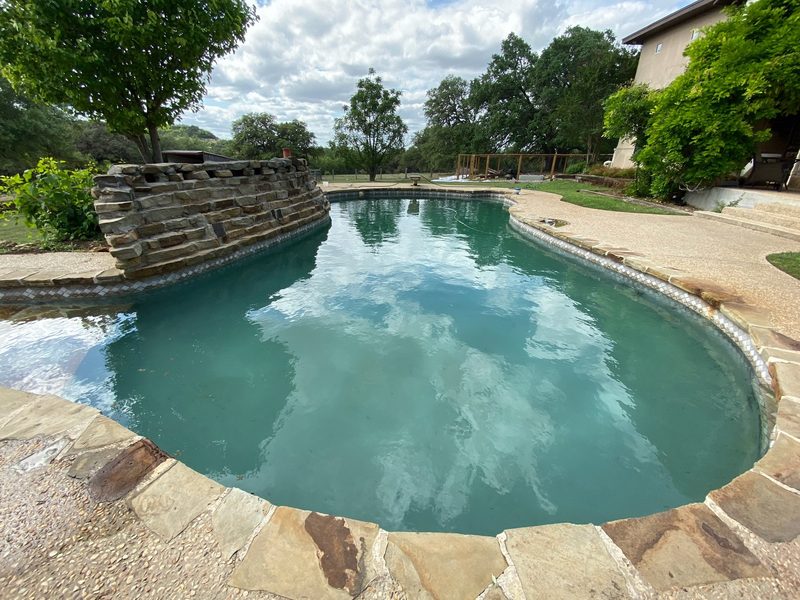 Finishes and renovationLimestone, Travertine or Concrete Coping With a Salt PoolWhy soft stone and salt water can clash, and what helps.Read
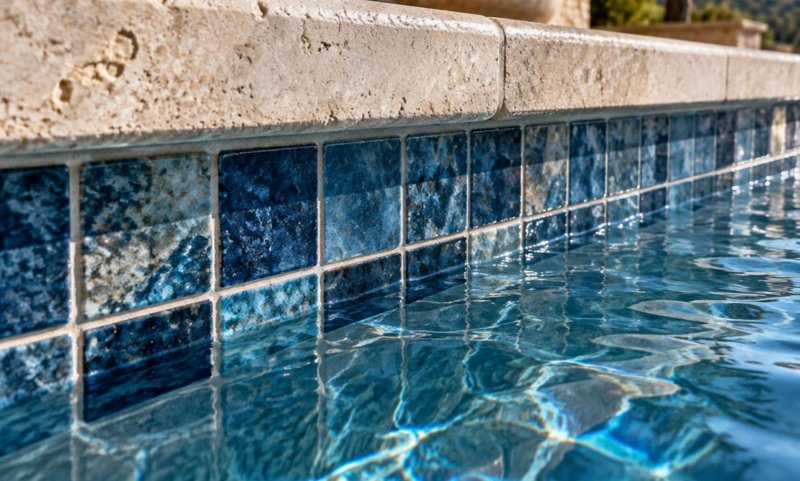 Care and ownershipHard Water and White Scale on Pool TileWhy white crust builds up on tile, and how to slow it down safely.Read
 Care and ownershipFreeze Week: Protecting Pool Equipment in a Hill Country Cold SnapA plan for the days before a hard freeze, the night of and the morning after.Read
Sources
Where these facts come from
- Pentair: IntelliChlor Salt Chlorine Generator Quick Start Guide
- CDC: Home Pool and Hot Tub Water Treatment and Testing
- San Antonio Water System: Water quality FAQs (hardness)
- Natural Stone Institute: Limestone
Sources checked October 25, 2026. Rules, fees and water stages change; check the source before you rely on a number.
Before you rely on this. This field note is general information, not professional, engineering or legal advice. Every pool and every site is different. What Pool Era does on your project, how and with what warranty, is only what your written agreement says. Local codes and HOA rules change, so check with your city, county or HOA before you rely on anything here. Website terms