Pool Era field notes · Finishes and renovation
New Pool Tile and Coping: What Changes and What to Plan
Is your waterline tile chipped, crusted white or falling off, or does the coping rock when you step on it? Tile and coping take the most sun, splash and foot traffic of any part of a pool.
Here is what a tile and coping remodel involves, and how to pick materials that suit our water.
Short answer
Fix the edge, then pick for hard water.
Replace tile and coping when they are loose, cracked or letting water in, not just when they look dated. For hard water, pick tile that soaks up very little water and is easy to wipe clean. Porcelain tile, by the ANSI standard, absorbs 0.5% water or less.[1] If you plan to replaster soon, do the tile and coping first or at the same time.
What they do
Tile and coping are the pool's edge.
Waterline tile is the band of tile at the top of the pool walls. It gives you a surface that is easy to wipe where the water level rises and falls. Coping is the cap on top of the pool wall, between the water and the deck. It is where people sit, step and climb out.
Because the coping sits on the bond beam at the top of the wall, a loose stone can be a sign of a problem below it. That is worth a look before anyone just resets the stone.
Signs
Signs it is time.
- Loose or rocking coping. Stones that move underfoot, or open joints between them.
- Cracked or missing tile. Gaps let water get behind the tile.
- Scale that won't come off. White crust that has etched into the tile surface.
- Water behind the edge. Damp deck joints or a crack between the coping and the deck.
- You are replastering anyway. Tile and coping work makes dust and debris, so it is often done before or with a new finish.
Materials
Picking tile and coping for our water.
The San Antonio Water System says its water has a typical hardness of 15 to 20 grains per gallon.[2] As pool water evaporates, that calcium is left behind at the waterline. Tile that is dense and smooth is easier to keep clean. Our guide to white scale on tile covers the care side.
| Choice | What it is like | What to ask |
|---|---|---|
| Porcelain tile | Dense and low-absorption by definition. Many colors and sizes. | Is it rated for pools and for outdoor use? |
| Glass tile | Bright, reflective and smooth. Shows scale lines clearly. | What setting material does the maker require? |
| Natural stone tile | Warm, local look. Can be softer and more porous. | How does it handle acid cleaners and hard water? |
| Limestone or travertine coping | Classic Hill Country look. Cool-ish underfoot. Sensitive to acids. | How much water does this stone absorb, and which sealer? |
| Cast stone or precast coping | Uniform pieces, often easier to replace one at a time. | Is it rated for a salt pool if you have one? |
| Poured concrete coping | One continuous edge, shaped on site. | How are cracks and expansion joints handled? |
The Natural Stone Institute says limestone and travertine are calcium carbonate stones that even mild acids can change, and that limestone absorption ranges from under 1% to over 10%.[3] So ask for the absorption number for the exact stone you are looking at. With a salt pool, read our stone coping and salt guide first.
The work
What a tile and coping job involves.
- Water level. For waterline tile, the water is usually lowered below the tile line. A full drain is mainly needed if the finish is being redone too.
- Removal. Old coping and tile come off, and the bond beam under them gets looked at.
- Setting. New tile and coping are set and grouted. The joint between the coping and the deck gets a flexible sealant.
- Cure and refill. Materials need time to set before the water comes back up.
If you drain and refill, check your water provider's drought stage first. During Stage 3, SAWS adds a surcharge for single-family homes that use more than 20,000 gallons in a month.[4] Our drought guide explains the stages.
Field note. Bring tile and coping samples outside and set them next to your deck in full sun. Wet them with a hose. Colors and textures change a lot between a showroom and a Hill Country afternoon.
Common questions
Tile and coping questions.
Can you replace pool tile without draining the pool?
Often, yes. For waterline tile, the water is usually lowered below the tile line rather than drained. A full drain usually comes with a full refinish.
Should I replace tile and coping at the same time as plaster?
If the finish is near its end, doing them together means one drain, one refill and no dust on a brand-new finish. Our guide to when to replaster can help you decide.
What tile is best for hard water?
Dense, smooth tile is easier to wipe clean. Porcelain absorbs 0.5% or less by the ANSI A137.1 standard.[1] Whatever you pick, weekly wiping and steady water balance matter more than the tile.
Why is my coping loose?
Mortar under the coping can break down over time, and movement in the deck or the bond beam can loosen it. Have the beam checked before the coping is reset.
How do I compare two tile and coping quotes?
List the exact tile, coping and setting materials, who handles the water level and refill, and how damage found under the coping gets priced. Our guide to comparing quotes walks through it.
Next step
See it on your pool.
Tile and coping choices depend on your deck, your water and how you use the pool. Conditions vary, so your project gets a written scope after we have seen it.
Related
More field notes
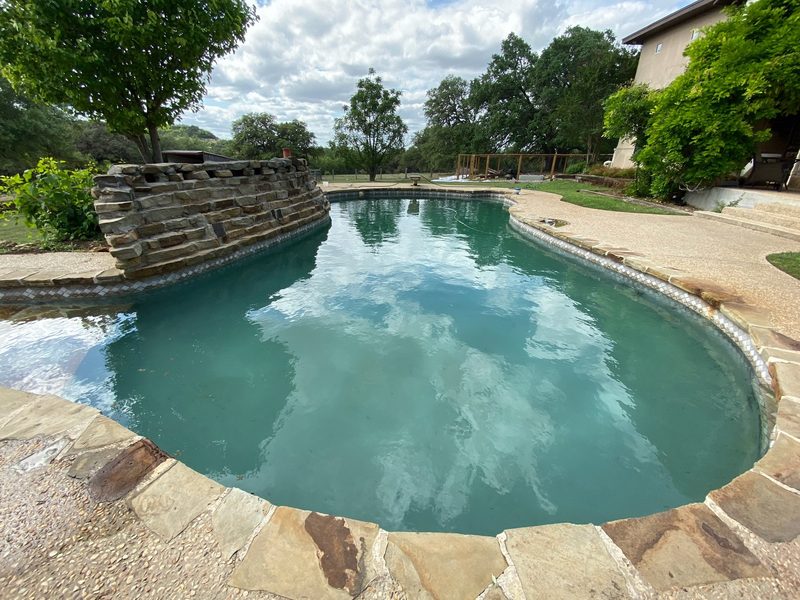 Finishes and renovationLimestone, Travertine or Concrete Coping With a Salt PoolWhy soft stone and salt water can clash, and what helps.Read
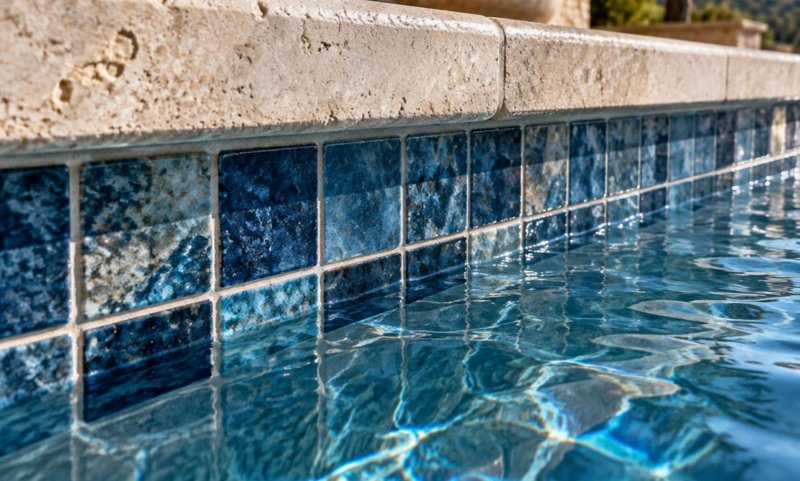 Care and ownershipHard Water and White Scale on Pool TileWhy white crust builds up on tile, and how to slow it down safely.Read
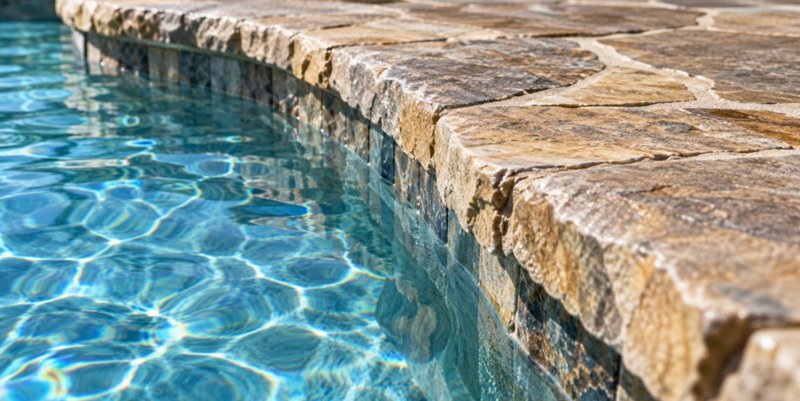 Finishes and renovationSigns It's Time to Replaster Your Pool (and When It Isn't)Rough spots, stains and worn patches: when to replaster and when it is just the water.Read
Sources
Where these facts come from
- American National Standards Institute (ANSI) blog: porcelain tile under ANSI A137.1:2022
- San Antonio Water System: Water quality FAQs (hardness)
- Natural Stone Institute: Limestone
- San Antonio Water System: Drought Restrictions and Watering Rules
Sources checked October 25, 2026. Rules, fees and water stages change; check the source before you rely on a number.
Before you rely on this. This field note is general information, not professional, engineering or legal advice. Every pool and every site is different. What Pool Era does on your project, how and with what warranty, is only what your written agreement says. Local codes and HOA rules change, so check with your city, county or HOA before you rely on anything here. Website terms